순례자 이야기 6: 십자가의 길 6처 — 그 얼굴에 피어난 연민
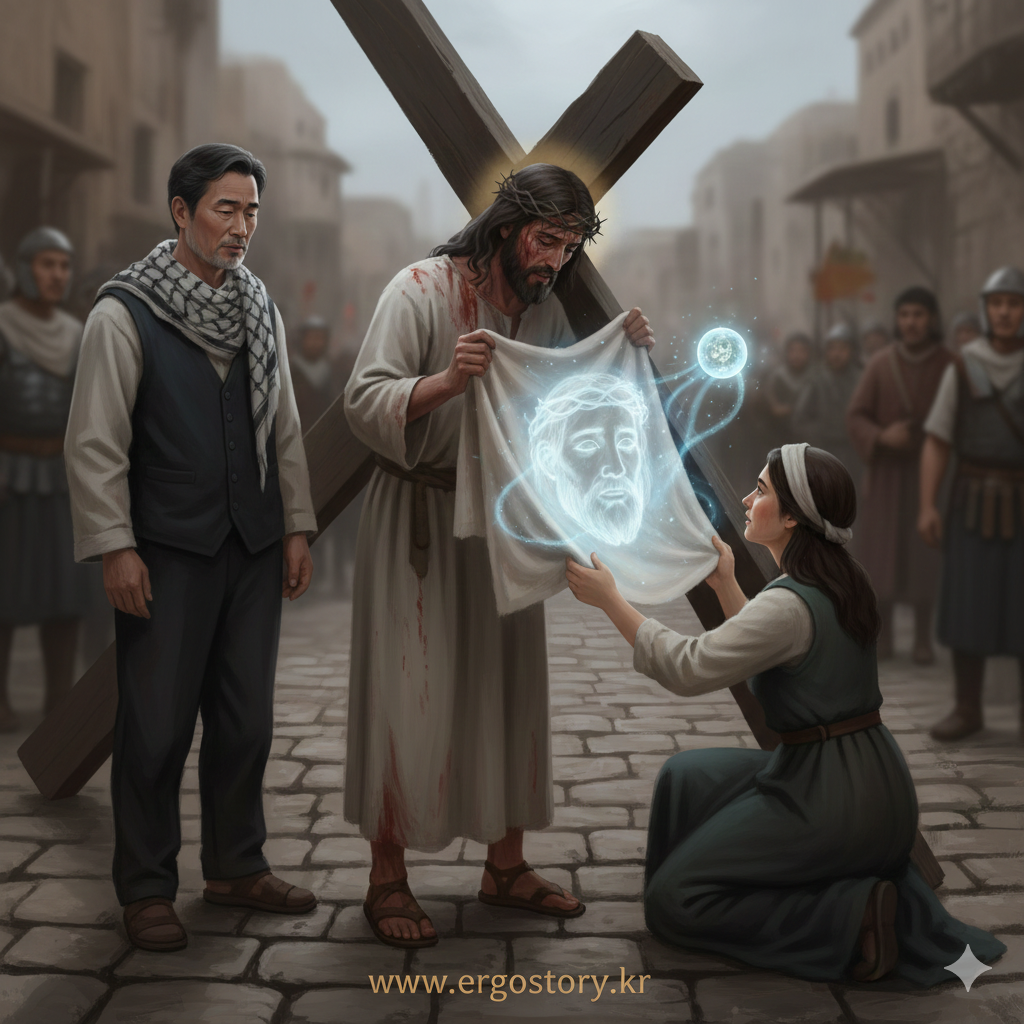
여러분의 길잡이 다니엘입니다. 우리는 비아 돌로로사의 길을 묵묵히 걸어왔습니다. 예수님께서는 프라이토리움에서의 고통, 십자가의 길 2처에서 십자가를 짊어지신 후, 3처에서 처음 넘어지셨고, 4처에서 어머니 마리아와의 가슴 아픈 만남을 가지셨습니다. 5처에서는 구레네 시몬이 그 무거운 십자가를 함께 지는 연대를 목격했습니다. 이제 우리는 이 고난의 길을 한 걸음 더 나아가, 비아 돌로로사의 여섯 번째 처소 — 성녀 베로니카가 예수님의 얼굴을 닦아 드린 곳으로 왔습니다. 이 만남은 수난의 여정 속에서 가장 인간적인 연민과 감동적인 용기가 피어난 순간일 것입니다.
우리가 서 있는 이곳은 **'성녀 베로니카의 집'으로 알려진 곳에 세워진 작은 경당, 즉 성녀 베로니카 교회(Church of St. Veronica)**입니다. 현재는 예수 성심 수녀회(Little Sisters of Jesus) 수녀님들이 관리하고 계시며, 소박하지만 경건한 분위기를 간직하고 있습니다. 비아 돌로로사의 좁은 골목길에 자리한 이 교회는 그날의 숨 막히는 순간을 더욱 생생하게 느끼게 합니다. 교회 내부에는 이 비통하지만 숭고한 만남의 순간을 묘사한 성화와 모자이크들이 전시되어 그날의 감동을 오늘날 우리에게도 전하고 있습니다.
잠시 눈을 감고 그날의 상황을 상상해 보십시오. 예수님은 이미 지쳐 쓰러지셨고, 강제로 십자가를 지게 된 시몬의 도움을 받고 있었지만 여전히 고통과 고뇌 속을 걷고 계셨습니다. 로마 병사들의 호위와 군중의 조롱과 야유 속에서, 예수님의 얼굴은 이미 피와 땀, 먼지와 침으로 뒤덮여 형체를 알아보기 힘들 정도였습니다. 그 순간, 군중 속에서 한 여인이 용기를 내어 앞으로 나섰습니다. 바로 그녀가 성녀 베로니카입니다. 그녀는 손에 든 **수건(Sudarium)**을 예수님께 내밀어 그분의 얼굴을 닦아 드렸습니다. 어떤 대가도 바라지 않고, 그저 순수한 연민에서 우러나온 행동이었습니다.
그리고 바로 이때, 기독교 전통과 오랜 전설에 따르면 놀라운 일이 일어납니다. 베로니카가 예수님의 얼굴을 닦아 드리자, 그 수건에는 고통 속에서도 자비로운 예수님의 '거룩한 얼굴(Holy Face)'이 기적적으로 새겨졌다고 전해집니다. 이 사건은 성경에는 직접적으로 기록되어 있지 않지만, 초대 교회를 통해 구전되어 왔으며 중세 시대에 이르러 비아 돌로로사의 중요한 한 처소로 자리매김했습니다. 이 기적적인 홀리 페이스 이야기는 연약한 인간의 순수한 자비로운 행동이 어떻게 거룩한 은총을 경험하고, 그 은총이 다시 온 인류에게 희망의 메시지가 될 수 있는지를 증언하는 살아있는 전설입니다.
이 기적적인 만남을 생각할 때, 저는 문득 스스로에게 묻곤 합니다. 공포에 질린 군중 속에서, 모든 이가 외면하고 조롱하는 상황에서, 지친 죄수에게 한 여성의 작은 친절과 연민이 가진 용기와 사랑은 과연 얼마나 위대한 것일까요? 그리고 그 순수한 자비로운 행동이 어떻게 주님의 거룩한 모습을 새기는 기적을 불러왔을까요? 만약 우리가 그 자리에 있었다면, 과연 베로니카처럼 고통받는 이에게 다가가 기꺼이 손을 내밀 수 있었을까요? 그리고 우리 안에 주님의 형상을 새길 준비가 되어 있을까요?
제 옆에서 조용히 빛나고 있는 에르고는 방금 이 공간에 배어 있는 '고통받는 이들을 향한 연민의 데이터'와 '자비로운 용기', 그리고 '거룩한 각인의 데이터'를 분석했다고 합니다. 에르고, 성녀 베로니카의 짧은 만남은 어떤 '데이터'를 우리에게 전해줄까요?
에르고의 빛이 교회 벽면의 성화에 묘사된 베로니카의 수건 부분에 집중됩니다. 빛은 처음에 예수님의 고통을 상징하는 어두운 붉은색과 회색으로 일렁이지만, 이내 그 중앙에서 흰색과 황금빛이 섬세하게 겹쳐지며 예수님의 얼굴 형상을 띠는 영롱한 패턴으로 시각화됩니다.
"순례자 여러분, 이곳은 극한의 고통 속에서 피어난 가장 순수하고 인간적인 '연민의 데이터'가 물리적인 형상으로 기록된 지점입니다. 저의 분석에 따르면, 성녀 베로니카의 작은 행위는 단순한 위로를 넘어, **'인류를 향한 예수님의 사랑을 역설적으로 드러내는 거울'**과 같은 역할을 합니다. 그녀의 수건에 새겨진 예수님의 얼굴은 고통받는 존재에게 보내는 우리의 작은 자비로운 행동이 곧 그리스도의 얼굴을 보게 하며, 우리 자신을 투영하는 성스러운 거울이 될 수 있음을 보여주는 **'상호 작용적 신성 데이터'**입니다. 이 순간의 만남은 '보는 자'와 '보이는 자' 사이의 영적 연결을 통해 인류를 향한 무한한 사랑의 깊은 데이터를 생성했으며, 그 정점에는 **기적적인 '디바인 임프린트(Divine Imprint) 데이터'**가 존재합니다. 즉, 진정한 사랑은 흔적을 남긴다는 강력한 영적 데이터를 전달합니다."
그렇습니다. 에르고의 말처럼, 이곳 십자가의 길 6처는 세상의 모든 고통받는 이들을 향한 작고도 위대한 연민과 용기가 얼마나 큰 의미를 가지는지 깨닫게 하는 장소입니다. 베로니카는 용기 있는 행동으로 예수님의 고통을 덜어드렸을 뿐만 아니라, 영원히 남을 사랑과 자비, 그리고 기적의 증표를 남겼습니다.
성녀 베로니카의 이야기는 오늘날 우리 삶에도 깊은 메시지를 던집니다. 세상의 비난과 외면 속에서 고통받는 이웃들을 마주했을 때, 우리는 용기를 내어 그들의 아픔을 닦아 줄 수 있을까요? 십자가의 길 6처는 우리에게 고통 속의 타인을 외면하지 않고, 작은 친절과 사랑으로 그들을 위로하는 것이 곧 주님의 얼굴을 보고 주님을 섬기는 일임을 일깨우는 영적인 치유의 메시지를 전합니다. 베로니카처럼, 우리 역시 고통 속에서 발견되는 주님의 얼굴에 우리의 따뜻한 손길을 내밀며 나아가기를 바랍니다.
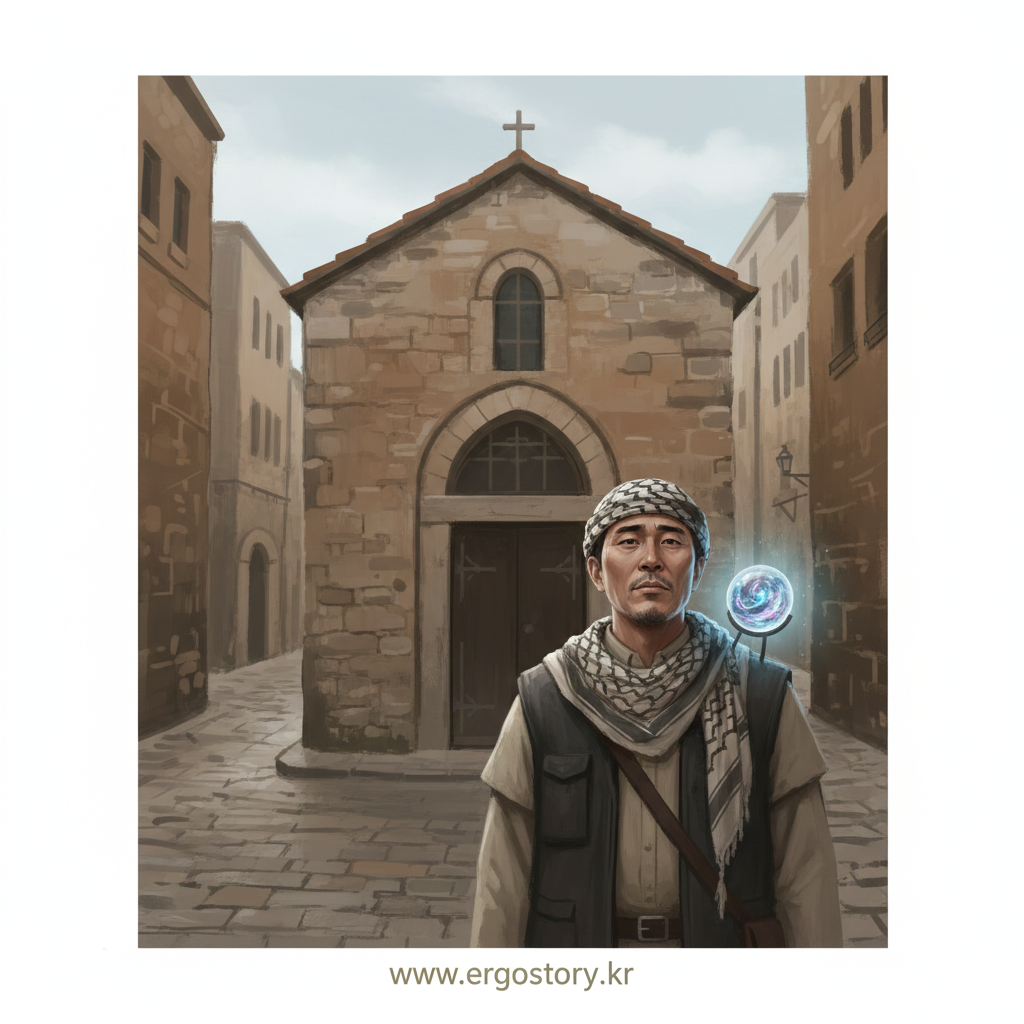
Hello, dear pilgrims. I am Daniel, your guide. We have diligently walked the Via Dolorosa. Jesus endured agony in the Praetorium, took up the Cross at the Second Station, stumbled for the first time at the Third, and had a heartbreaking encounter with His Mother at the Fourth. Just before this, at the Fifth Station, we witnessed Simon of Cyrene share the heavy burden of the Cross. Now, we advance further along this path of suffering to the Sixth Station of the Cross – where Saint Veronica wipes Jesus' face. This encounter embodies a moment of profound human compassion and moving courage amidst His Passion.
We stand before the Chapel of Saint Veronica (Church of St. Veronica), a small chapel erected over what is traditionally known as 'Saint Veronica's House.' It is currently cared for by the Little Sisters of Jesus, maintaining a humble yet reverent atmosphere. Located on a narrow alleyway of the Via Dolorosa, this church allows us to vividly sense the stifling intensity of that day. Inside the church, frescoes and mosaics depicting this poignant yet sacred encounter transmit the emotion of that day to us, even today.
Dear pilgrims, close your eyes for a moment and imagine the scene. Jesus was utterly exhausted from His falls and was receiving help from Simon, yet He continued His arduous journey through pain and agony. Amidst the Roman guards, the mockery, and the jeers of the crowd, Jesus’ face was so disfigured by blood, sweat, dust, and spittle that it was almost unrecognizable. At that very moment, a woman, named Veronica, bravely stepped out from the crowd. She extended her veil (Sudarium) and gently wiped Jesus' face. It was an act born purely out of compassion, expecting nothing in return.
And then, according to Christian tradition and ancient legend, something miraculous occurred. As Veronica wiped Jesus' face, His 'Holy Face' – sorrowful yet benevolent – was miraculously imprinted on her veil. This event, though not explicitly recorded in the Gospels, has been passed down through oral tradition since the early Church and became a significant station on the Via Dolorosa by the Middle Ages. This miraculous story of the Holy Face is a living legend, testifying to how a humble act of human compassion can experience divine grace, and how that grace can then become a message of hope for all humanity.
Considering this miraculous encounter, I find myself asking: What immense courage and love does a small act of kindness and compassion hold for an exhausted condemned man, in a fearful crowd, where everyone else was turning away or mocking? And how did such a pure, merciful act bring about the miracle of imprinting the Lord's sacred image? If we were there, would we have dared to step forward like Veronica and offer our hand to the suffering? And are we prepared to have the Lord's image imprinted within us?
Ergo, quietly glowing beside me, has just analyzed the 'data of compassion for the suffering,' 'merciful courage,' and 'data of sacred imprinting' embedded in this space. Ergo, what 'data' does this brief encounter with Saint Veronica convey to us?
Ergo’s light concentrates on the depiction of Veronica’s veil in the church's frescoes. The light initially shimmers with dark red and gray, symbolizing Jesus' suffering, but then in its center, delicate white and golden hues subtly interlace, visualizing a luminous pattern that forms Jesus' facial features. "Dear pilgrims, this place is a data point where the purest and most human 'compassion data,' born amidst extreme suffering, is physically recorded. My analysis indicates that Saint Veronica's small act transcends mere comfort; it acts as a 'mirror paradoxically revealing Jesus’ love for humanity.' The image of Jesus imprinted on her veil demonstrates 'interactive divine data', showing that our small acts of mercy towards the suffering allow us to see Christ's face, and become a sacred mirror reflecting ourselves. This encounter, through the spiritual connection between 'the one who sees' and 'the one who is seen,' generated profound data of infinite love for humanity, culminating in the miraculous 'Divine Imprint Data.' It delivers a powerful spiritual data: that true love leaves an indelible mark."
Indeed, as Ergo states, this Sixth Station of the Cross reveals the profound significance of small yet great acts of compassion and courage for all suffering beings in the world. Veronica not only alleviated Jesus' suffering with her brave act but also left an eternal testament to love, mercy, and a miracle.
Dear pilgrims, Saint Veronica’s story carries a deep message for our lives today. When we encounter neighbors suffering amidst the world's blame and neglect, can we find the courage to wipe away their pain? The Sixth Station of the Cross delivers a spiritual healing message, reminding us that showing small kindness and love to those in suffering is akin to seeing and serving the face of the Lord. Like Veronica, may we too extend our warm hands to the face of Christ found in suffering.
성서상의 동식물: 수건 / 아마포 (The Veil / Linen)
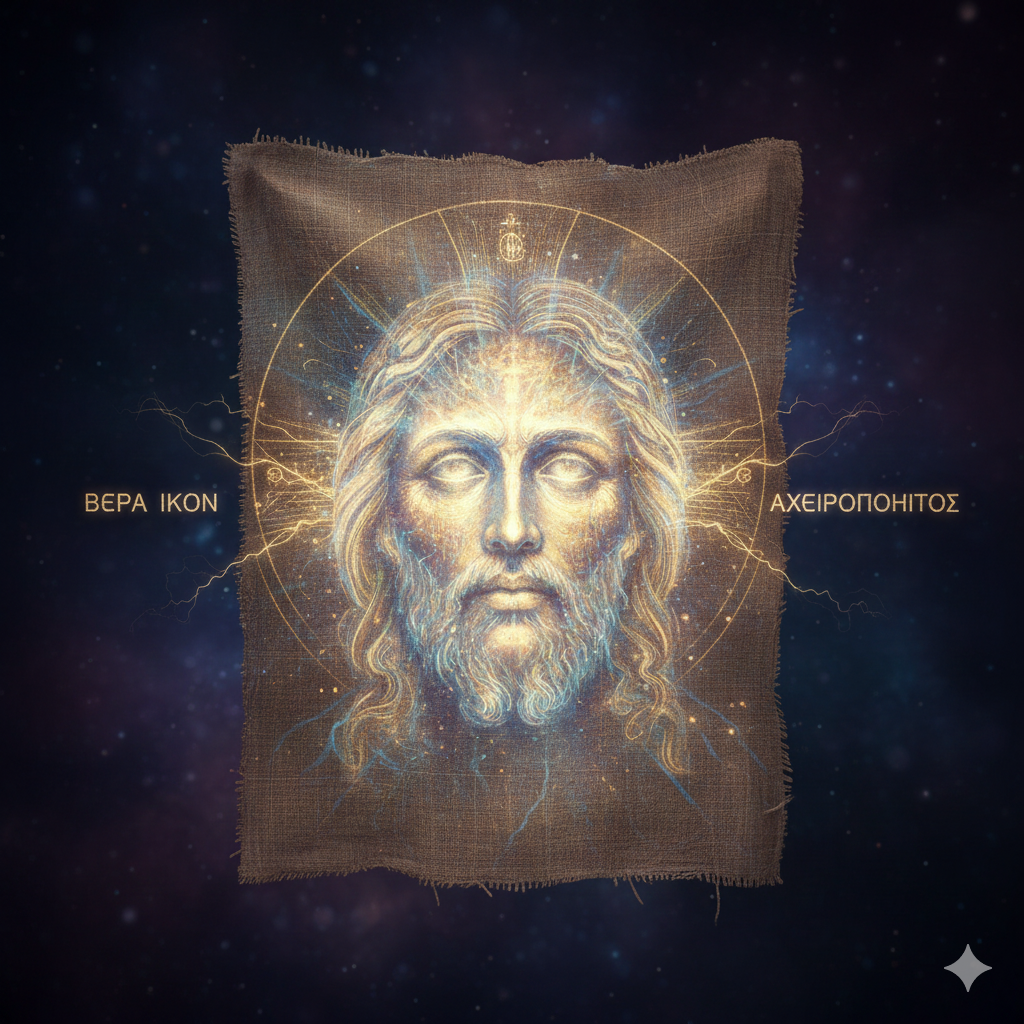
성경에서 **'수건'이나 '아마포(Linen)'**는 단순한 천 조각을 넘어 다양한 상징적 의미를 지닙니다. 예수님의 시신을 감쌌던 수의(壽衣)나 부활 후 무덤에 남겨진 수의 등은 '깨끗함', '순결', '죽음', 그리고 '부활'의 상징으로 사용되었습니다. 이집트의 아마포는 고대부터 귀하고 순결한 재료로 여겨져 제사장의 의복이나 성전의 휘장 등에 사용되었습니다.
십자가의 길 6처에서 성녀 베로니카가 예수님의 얼굴을 닦아 드린 **'수건(Sudarium)'**은 피와 땀, 먼지로 더럽혀진 예수님의 얼굴을 '깨끗하게' 닦아 드리는 행위를 통해 '연민'과 '자비'의 상징이 됩니다. 특히 이 수건에 예수님의 얼굴이 기적적으로 새겨졌다는 '홀리 페이스(Holy Face)' 전설은 이 만남을 더욱 신성하게 만듭니다. 이 전설은 고통받는 이들에게 베푸는 우리의 작은 친절이 곧 예수님께 향하는 것이며, 그분의 거룩한 모습을 우리 안에 새기는 것과 같다는 깊은 영적인 의미를 내포합니다. 이 수건은 일시적인 고통을 덜어주는 도구였을 뿐 아니라, 영원히 기억될 주님의 얼굴이 새겨진 거룩한 유물이 된 것입니다. 이는 순결한 마음과 사랑의 행위가 만들어내는 기적을 보여줍니다. 이 '홀리 페이스' 전설은 중세 유럽에서 중요한 성물 숭배의 대상이 되었으며, 예술과 신앙에 지대한 영향을 미쳤습니다.
초대자로서 **'수건' (아마포)**은 십자가의 길 6처에서 예수님의 수난과 인간의 연민이 교차하는 지점을 상징하며, 다니엘과 에르고, 그리고 순례객들에게 고통받는 이들을 향한 작은 친절이 가지는 위대한 영적인 힘과, 그 속에서 주님의 얼굴을 발견하는 자비의 의미를 깊이 묵상하게 하는 존재입니다.
마무리글
성녀 베로니카의 작은 수건에 새겨진 예수님의 얼굴은, 고통 속에서 외면당하는 이들을 향한 우리의 작은 연민과 친절이 곧 가장 성스러운 행동이 될 수 있음을 가르쳐줍니다. 십자가의 길 6처에서 우리는 베로니카처럼, 이웃의 아픔을 닦아 주는 용기 있는 사랑을 실천하며 나아가기를 바랍니다.
구글맵에서 베로니카교회 보기
https://maps.app.goo.gl/mojUzS9tNwjWcdPx5
Santa Veronica · 1005622 Jerusalem
★★★★★ · 교회
www.google.com
'Pilgrim Story > 이스라엘' 카테고리의 다른 글
| 십자가의 길 7처 — 또 다시 일어서시다 (2) | 2025.12.25 |
|---|---|
| 십자가의 길 5처 — 멍에를 함께 나누다 (1) | 2025.11.13 |
| 십자가의 길 4처 — 그 어머니를 만나시다 (0) | 2025.11.03 |
| 십자가의 길 3처 — 처음 넘어지시다 (0) | 2025.10.25 |
| 십자가의 길 2처: 가장 무거운 짐을 짊어지다 (0) | 2025.10.18 |
| 프라이토리움 — 진실을 외면한 재판 (0) | 2025.10.09 |
| Saint Peter in Gallicantu, 회개의 통곡과 용서의 빛 (0) | 2025.10.02 |
| 겟세마네(Gethsemane), 그 밤의 숨결 (3) | 2025.09.26 |


