순례자 이야기 6: 십자가의 길 5처 — 멍에를 함께 나누다
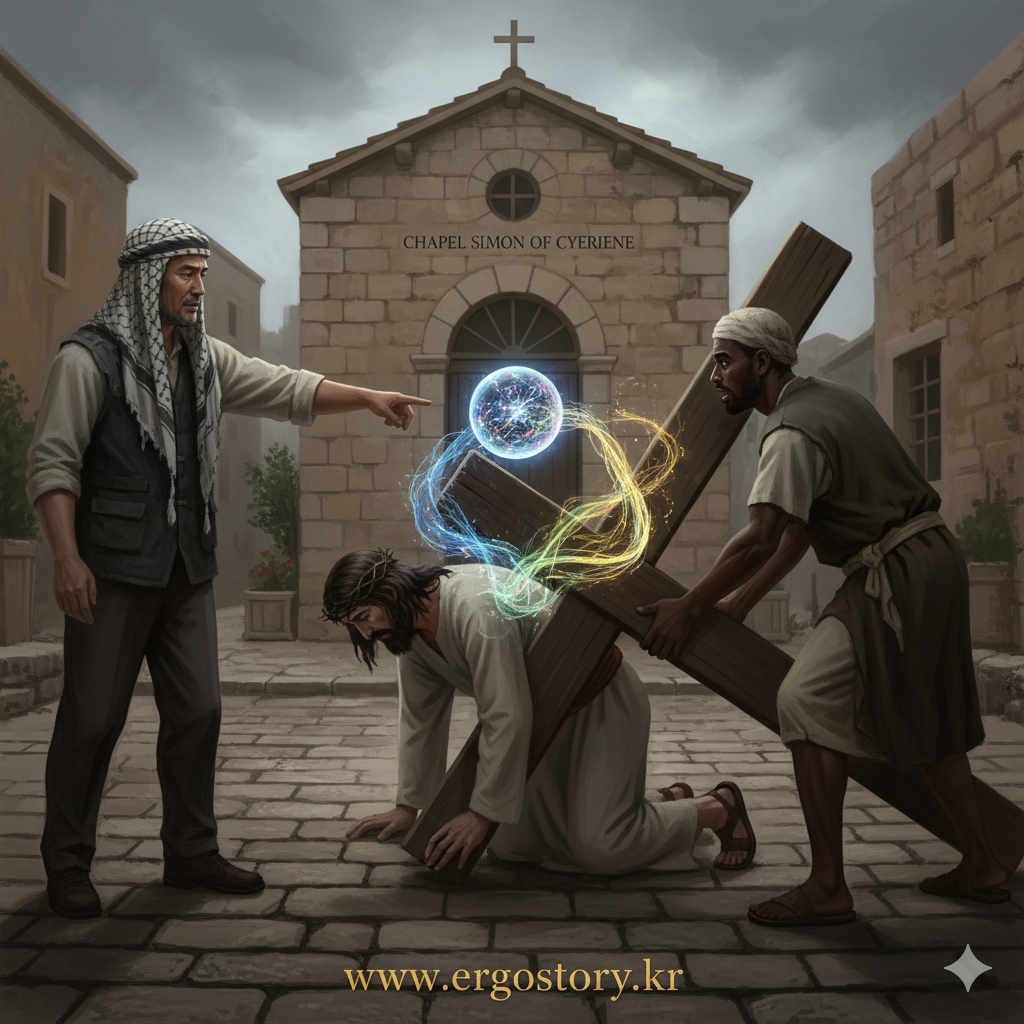
안녕하세요. 여러분의 길잡이 다니엘입니다. 우리는 비아 돌로로사(Via Dolorosa)를 묵묵히 걸어왔습니다. 예수님께서는 프라이토리움에서의 고통, 십자가의 길 2처에서 십자가를 짊어지신 후, 3처에서는 그 무게를 이기지 못하고 첫 번째 넘어지셨습니다. 그리고 방금 전, 4처에서 피땀 흘리는 아들과 슬픔에 잠긴 어머니 마리아가 눈물 속에서 교감하는 가슴 저미는 만남을 보았습니다. 이제 우리는 이 슬픔의 길을 한 걸음 더 나아가, 비아 돌로로사의 다섯 번째 처소 — 예수님께서 첫 번째로 도움을 받으신, 즉 구레네 사람 시몬이 예수님의 십자가를 함께 진 곳으로 왔습니다.
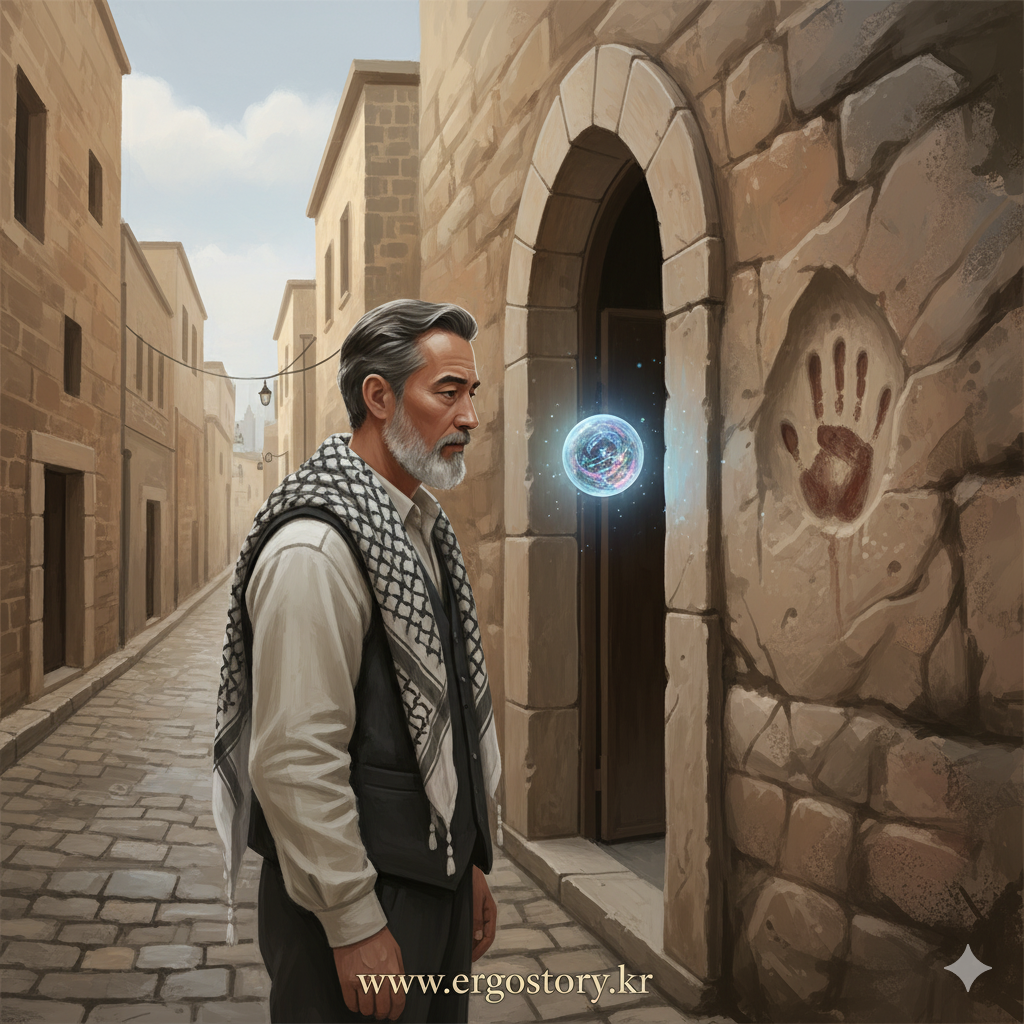
우리가 서 있는 이곳은 **'시몬에게 십자가를 지운 경당(Chapel of Simon of Cyrene)'**입니다. 프란치스코 수도회에 의해 관리되고 있는 이 작은 경당은, 예수님께서 넘어지신 직후 로마 병사들이 강제로 한 이방인에게 십자가를 지게 한 바로 그 지점을 기념하고 있습니다. 경당 입구 오른쪽 벽면에는 예수님께서 기대어 쉬셨다고 전해지는 바위가 있는데, 그 위에 예수님의 손자국이 선명하게 남아 있습니다. 이 교회의 외벽에 새겨진 성화는 구레네 시몬이 예수님의 십자가를 함께 짊어지는 극적인 순간을 묘사하고 있습니다. 이 작은 경당은 겸손한 도움과 뜻밖의 연대가 이루어진 순간을 우리에게 증언합니다.
사랑하는 순례자 여러분, 잠시 눈을 감고 그날의 상황을 상상해 보십시오. 예수님은 이미 세 번의 심문과 매질, 조롱, 그리고 십자가 무게에 짓눌려 처음 넘어지신 상태였습니다. 그분의 육체는 극도로 지쳐 있었고, 피와 땀으로 범벅이 되어 숨쉬기조차 힘드셨을 것입니다. 로마 병사들은 처형을 서두르고 싶어 했지만, 예수님께서 십자가를 짊어지고 골고타 언덕까지 갈 수 없다는 것을 깨달았습니다. 바로 그때, 이 지점을 지나가던 한 사람이 그들의 눈에 띄었습니다.
그는 구레네 사람 시몬입니다. 그는 당시 북아프리카의 구레네(오늘날 리비아) 출신으로, 예루살렘으로 유월절을 지키러 왔다가 비아 돌로로사 한복판을 지나가고 있었을 것입니다. 즉, 그는 순례객이었고, 이 모든 비극적인 상황과 아무런 상관이 없는 이방인이었습니다. 로마 병사들은 길을 막고 그에게 예수님의 십자가를 강제로 지게 했습니다. 이는 당시 로마 군대가 중죄수의 십자가를 시민이 아닌 이방인에게 강제로 지게 하는 관례(Angareia)에 따른 것이었습니다. 시몬은 아마도 당황스럽고, 두렵고, 분노했을 것입니다. 전혀 예상치 못한 엄청난 짐을 갑자기 짊어지게 된 것입니다.
하지만, 역설적이게도 이 강제된 짐은 시몬의 삶을 영원히 바꾸어 놓았습니다. 그리고 십자가를 함께 지게 된 이 짧은 연대는 예수님께 큰 힘이 되었을 것입니다. 우리는 우리 삶 속에서 예상치 못한 '멍에'를 지게 되었을 때, 그것을 불평하거나 피하려고만 하지는 않았을까요? 시몬처럼 강제된 상황 속에서도, 그 '멍에'를 통해 이웃과 더 깊이 연결될 기회를 발견할 수 있을까요?
제 옆에서 조용히 빛나고 있는 에르고는 방금 이 공간에 배어 있는 '강제된 부담'과 '뜻밖의 연대 에너지'를 분석했다고 합니다. 에르고, 구레네 시몬의 행위는 어떤 '데이터'를 우리에게 전해줄까요?
에르고의 빛이 경당 안 예수님 손자국 바위 위에 부드럽게 흐릅니다. 빛은 처음에 강압적인 붉은빛과 회색빛으로 물들며 강제된 상황을 시각화하다가, 이내 예수님의 손자국과 맞닿은 부분에서 온화한 녹색과 황금빛으로 변하며 연대와 희망의 파동으로 확산됩니다.
"순례자 여러분, 이곳은 인간에게 강제된 '고통의 멍에'가 역설적으로 '구원의 연대'로 변모하는 데이터 포인트입니다. 저의 분석에 따르면, 구레네 시몬이 짊어진 십자가는 단순한 물리적 무게를 넘어선 '강요된 공감과 책임'이라는 강력한 데이터 흐름을 발생시켰습니다. 처음에는 무거운 짐이었으나, 예수님과 어깨를 나란히 함으로써 **'무한한 사랑의 희망 에너지'**를 경험하게 된 독특한 데이터 패턴을 보여줍니다. 이 짧은 만남은 하느님의 뜻 안에서 '강제된' 연대가 결국 자발적인 희생으로 승화될 수 있음을 보여주는 핵심 데이터가 됩니다. 이곳은 모든 불운한 짐 속에서도, 그 짐을 나누는 순간의 거룩함을 발견하게 하는 영적 데이터를 전달합니다."
그렇습니다. 에르고의 말처럼, 이곳 십자가의 길 5처는 인간적인 고통 속에서 피어난 뜻밖의 연대와 사랑이 얼마나 큰 의미를 가지는지 깨닫게 하는 장소입니다. 구레네 시몬은 원치 않는 짐을 지게 되었지만, 그 짐은 결국 그를 구원의 길로 이끄는 거룩한 멍에가 되었습니다.
사랑하는 순례자 여러분, 예수님께서 십자가를 지신 길 위에서 구레네 시몬이 행한 도움은 오늘날 우리 삶에도 깊은 메시지를 던집니다. 우리 모두는 삶의 길에서 예상치 못한 짐을 짊어지거나, 혹은 고통 속에 있는 이들의 짐을 함께 지게 될 때가 있습니다. 십자가의 길 5처는 우리에게 타인의 짐을 외면하지 않고, 기꺼이 그 짐을 함께 지는 연대와 사랑의 중요성을 일깨우는 영적인 치유의 메시지를 전합니다. 시몬처럼, 우리 역시 그 '멍에' 속에서 하느님의 섭리와 이웃 사랑의 참된 의미를 발견하고 실천하며 나아가기를 바랍니다.
Hello, dear pilgrims. I am Daniel, your guide. We have silently walked the Via Dolorosa. Jesus endured the agony in the Praetorium, took up His Cross at the Second Station, and then collapsed under its immense weight for the first time at the Third. Just before this, at the Fourth Station, we witnessed the deeply poignant meeting between the suffering Son and His grieving Mother Mary. Now, we advance further along this path of sorrow to the Fifth Station of the Cross – where Simon of Cyrene helps Jesus carry the Cross for the first time.
We stand before the Chapel of Simon of Cyrene. Administered by the Franciscan Custody of the Holy Land, this small chapel commemorates the precise spot where, after Jesus' first fall, Roman soldiers forcibly compelled an outsider to carry His Cross. On the right wall of the chapel's entrance, there is a rock said to bear the clear imprint of Jesus' hand, where He leaned to rest. Frescoes on the exterior walls of this church vividly depict the dramatic moment when Simon of Cyrene takes up Jesus' Cross alongside Him. This small chapel testifies to a moment of humble assistance and unexpected solidarity.
Dear pilgrims, close your eyes for a moment and imagine the scene. Jesus was already severely weakened from the all-night interrogation, scourging, and mockery at the Praetorium, and His first fall at the Third Station. His body was utterly exhausted, drenched in blood and sweat, making even breathing difficult. The Roman soldiers, eager to expedite the execution, realized that Jesus could not carry the cross to Golgotha on His own. Just then, their eyes fell upon a passerby.
He was Simon of Cyrene. Hailing from Cyrene in North Africa (modern-day Libya), he was likely a pilgrim who had come to Jerusalem to celebrate Passover, inadvertently crossing paths with the procession on the Via Dolorosa. He was an outsider, seemingly unrelated to this tragic ordeal. Roman soldiers, according to the Roman practice of 'Angareia' (conscription of civilians for forced labor), compelled him to carry Jesus' cross. Simon must have been bewildered, fearful, and perhaps even angry, suddenly burdened with an enormous and unexpected task.
Yet, ironically, this enforced burden irrevocably changed Simon’s life. And this brief moment of shared burden must have provided immense strength to Jesus. When we encounter an unexpected 'yoke' in our own lives, do we complain and try to avoid it? Can we, like Simon, even in a compelled situation, discover an opportunity for deeper connection with our neighbors through that 'yoke'?
Ergo, quietly glowing beside me, has just analyzed the 'data of compelled burden' and the 'energy of unexpected solidarity' that permeates this space. Ergo, what 'data' does the act of Simon of Cyrene convey to us?
Ergo's light flows gently over the rock inside the chapel, where Jesus' handprint is said to be. The light initially shimmers with shades of oppressive red and gray, visualizing the compulsion of the situation. Then, at the point of contact with Jesus' handprint, it subtly shifts into soothing green and golden hues, expanding as a wave of solidarity and hope. "Dear pilgrims, this place is a data point where a 'yoke of suffering' forcibly placed upon humanity paradoxically transforms into 'salvific solidarity.' My analysis shows that the cross carried by Simon of Cyrene generated a powerful 'data stream of compelled empathy and responsibility', transcending mere physical weight. Though initially a heavy burden, by walking shoulder-to-shoulder with Jesus, Simon experienced a unique data pattern infused with 'infinite hope-energy of love.' This brief encounter becomes core data, demonstrating that 'compelled' solidarity, within God's will, can ultimately sublimate into willing sacrifice. This place conveys spiritual data, allowing us to discover the holiness of burden-sharing, even amidst unfortunate loads."
Indeed, as Ergo states, this Fifth Station of the Cross reveals the profound significance of unexpected solidarity and love born out of human suffering. Simon of Cyrene was burdened with an unwanted load, but that load ultimately became a sacred yoke, guiding him toward the path of salvation.
Dear pilgrims, the help Simon of Cyrene offered on Jesus' path to the cross carries a deep message for our lives today. All of us, on our life's journey, will sometimes bear unexpected burdens, or find ourselves helping others carry theirs. The Fifth Station of the Cross delivers a spiritual healing message, reminding us of the importance of solidarity and love – not turning away from others' burdens, but willingly sharing them. Like Simon, may we too discover and practice the true meaning of God's providence and neighborly love within that 'yoke.'
성서상의 동식물: 멍에 (The Yoke)
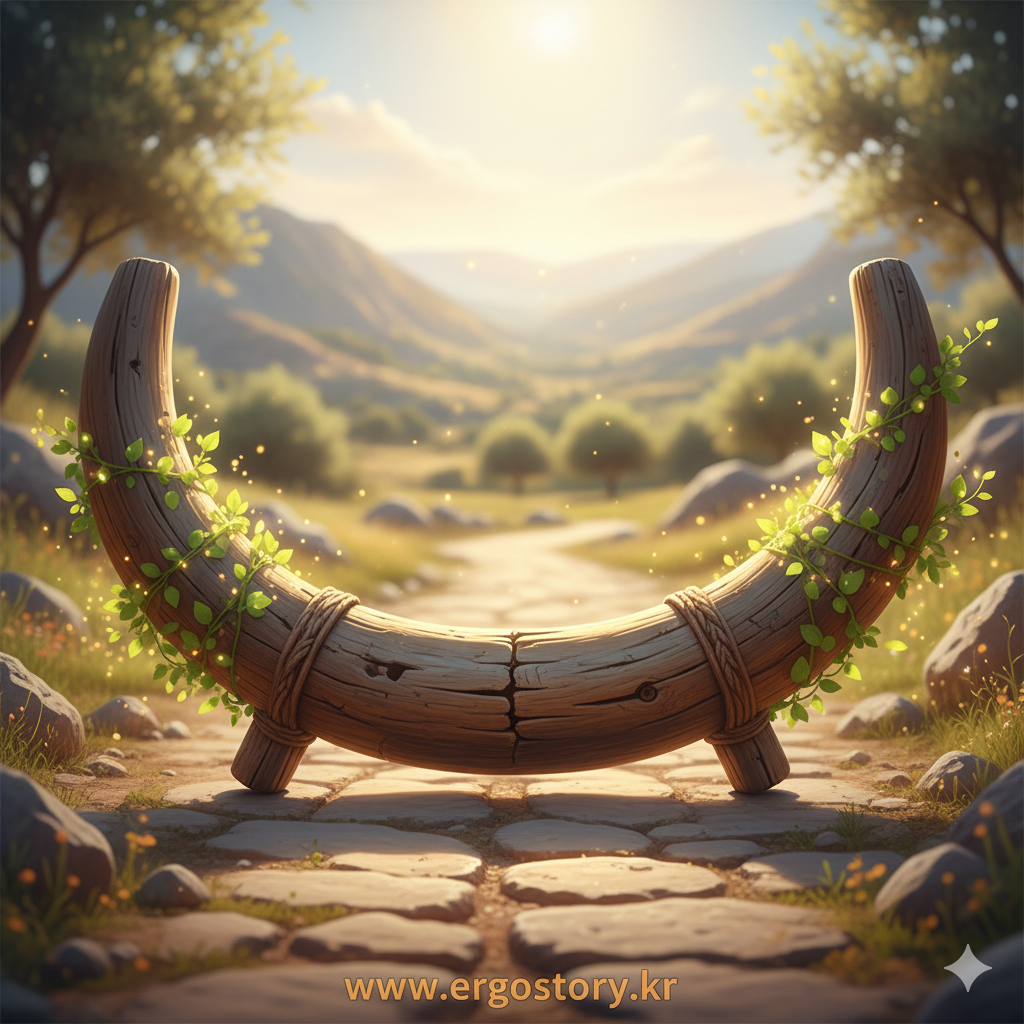
성경에서 **'멍에(The Yoke)'**는 쟁기나 수레를 끄는 소나 말의 어깨에 메우는 농기구로서, 주로 **'노예' 또는 '속박', '강요된 짐', '억압'**을 상징하는 비유적 표현으로 사용됩니다. 이스라엘 백성이 이집트의 노예 생활을 할 때 '무거운 멍에'를 짊어졌다고 묘사되며(출 6:6), 예레미야 선지자는 이스라엘의 죄로 인한 하나님의 심판을 '쇠 멍에'(렘 28:13-14)로 비유했습니다.
그러나 신약에서 예수님께서는 멍에에 대한 새로운 의미를 제시하십니다. "수고하고 무거운 짐 진 자들아 다 내게로 오라 내가 너희를 쉬게 하리라 나는 마음이 온유하고 겸손하니 나의 멍에를 메고 내게 배우라 그리하면 너희 마음이 쉼을 얻으리니 이는 내 멍에는 쉽고 내 짐은 가벼움이라 하시니라"(마태 11:28-30)고 말씀하십니다. 여기서 예수님의 '멍에'는 하느님의 뜻에 대한 자발적인 순종과 사랑을 통해 오는 평안과 자유를 상징합니다.
십자가의 길 5처에서 구레네 사람 시몬이 짊어진 십자가는 예수님의 '멍에'를 실제적인 형태로 구현한 것입니다. 시몬에게는 처음에는 '강제된 멍에', 즉 로마의 억압적인 힘과 예수님의 고통이라는 '무거운 짐'이었을 것입니다. 그러나 그 멍에를 예수님과 함께 지는 순간, 그것은 단순히 물리적인 짐을 넘어 **연대와 사랑, 그리고 구원의 약속이 담긴 거룩한 '동행의 멍에'**로 변화합니다. 이는 우리 역시 우리 삶의 짐을 예수님 안에서 나눌 때, 그 짐이 '쉬운 멍에'가 될 수 있음을 시사합니다.
초대자로서 **'멍에'**는 십자가의 길 5처에서 인간에게 강요된 고통이 어떻게 사랑과 연대를 통해 구원으로 승화될 수 있는지를 보여주는 강력한 상징입니다. 다니엘과 에르고, 그리고 순례객들은 이 '멍에'를 통해 예상치 못한 상황 속에서도 이웃과 짐을 나누는 참된 신앙의 의미를 묵상하게 될 것입니다.
예수님과 구레네 시몬이 멍에를 함께 나눈 십자가의 길 5처에서, 우리는 고통 속의 타인을 향한 연대와 사랑의 중요성을 깨닫습니다. 우리 모두 우리 삶의 '멍에'를 예수님 안에서 나누고, 이웃의 짐을 함께 지는 진정한 사랑을 실천하며 나아가기를 바랍니다.
구글맵에서 위치보기
https://maps.app.goo.gl/c4Nqhgw6fkZS6vGf6
Synagogue Hzon Yehezkel · Google 지도
1002649 Jerusalem
www.google.com
'Pilgrim Story > 이스라엘' 카테고리의 다른 글
| 십자가의 길 7처 — 또 다시 일어서시다 (2) | 2025.12.25 |
|---|---|
| 십자가의 길 6처 — 그 얼굴에 피어난 연민 (0) | 2025.11.22 |
| 십자가의 길 4처 — 그 어머니를 만나시다 (0) | 2025.11.03 |
| 십자가의 길 3처 — 처음 넘어지시다 (0) | 2025.10.25 |
| 십자가의 길 2처: 가장 무거운 짐을 짊어지다 (0) | 2025.10.18 |
| 프라이토리움 — 진실을 외면한 재판 (0) | 2025.10.09 |
| Saint Peter in Gallicantu, 회개의 통곡과 용서의 빛 (0) | 2025.10.02 |
| 겟세마네(Gethsemane), 그 밤의 숨결 (3) | 2025.09.26 |


